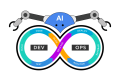
CI/CD for AI: Automating Docker-Based Model Builds and Deployments Training Course
CI/CD for AI is a structured approach to automating model packaging, testing, containerisation, and deployment using continuous integration and continuous delivery pipelines.
This instructor-led, live training (online or onsite) is aimed at intermediate-level professionals who wish to automate end-to-end AI model delivery workflows using Docker and CI/CD platforms.
By the end of the training, participants will be able to:
- Create automated pipelines for building and testing AI model containers.
- Implement version control and ensure reproducibility throughout model lifecycles.
- Integrate automated deployment strategies for AI services.
- Apply CI/CD best practices tailored to machine learning operations.
Course Format
- Instructor-led presentations and technical discussions.
- Practical labs and hands-on implementation exercises.
- Realistic CI/CD workflow simulations in a controlled environment.
Course Customisation Options
- If your organisation requires customised pipeline workflows or platform integrations, please contact us to tailor this course.
Course Outline
Introduction to CI/CD for AI Workflows
- Unique challenges of AI model delivery pipelines
- Comparing traditional DevOps and MLOps processes
- Core components of automated model deployment
Containerising AI Models with Docker
- Designing efficient Dockerfiles for ML inference
- Managing dependencies and model artefacts
- Building secure and optimised images
Setting Up CI/CD Pipelines
- CI/CD tooling options and their ecosystems
- Building pipelines for automated model packaging
- Validating pipelines with automated checks
Testing AI Models in CI
- Automating data integrity checks
- Unit and integration tests for model services
- Performance and regression validation
Automated Deployment of Docker-Based AI Services
- Deploying AI containers to cloud environments
- Implementing blue-green and canary rollouts
- Rollback strategies for failed deployments
Managing Model Versions and Artefacts
- Using registries for model and container version control
- Tagging, signing, and promoting images
- Coordinating model updates across services
Monitoring and Observability in CI/CD for AI
- Tracking pipeline and model performance
- Alerting for failed builds or model drift
- Tracing inference behaviour across environments
Scaling CI/CD Pipelines for AI Systems
- Parallelising builds for large models
- Optimising compute and storage resources
- Integrating distributed and remote runners
Summary and Next Steps
Requirements
- An understanding of machine learning model lifecycles
- Experience with Docker containerisation
- Familiarity with CI/CD concepts and pipelines
Audience
- DevOps engineers
- MLOps teams
- AI-ops engineers
Open Training Courses require 5+ participants.
CI/CD for AI: Automating Docker-Based Model Builds and Deployments Training Course - Booking
CI/CD for AI: Automating Docker-Based Model Builds and Deployments Training Course - Enquiry
CI/CD for AI: Automating Docker-Based Model Builds and Deployments - Consultancy Enquiry
Provisional Upcoming Courses (Require 5+ participants)
Related Courses
AI-Driven Deployment Orchestration & Auto-Rollback
14 HoursAI-driven deployment orchestration is an approach that uses machine learning and automation to guide rollout strategies, detect anomalies, and trigger automatic rollback when needed.
This instructor-led, live training (online or onsite) is aimed at intermediate-level professionals who wish to optimise deployment pipelines with AI-powered decision-making and resilience capabilities.
Upon completion of this training, participants will be able to:
- Implement AI-assisted rollout strategies for safer deployments.
- Predict deployment risk using machine learning–driven insights.
- Integrate automated rollback workflows based on anomaly detection.
- Enhance observability to support intelligent orchestration.
Format of the Course
- Instructor-led demonstrations with technical deep dives.
- Hands-on scenarios focused on deployment experimentation.
- Practical labs simulating real-world orchestration challenges.
Course Customisation Options
- Customised integrations, toolchain support, or workflow alignment can be arranged upon request.
AI for DevOps: Integrating Intelligence into CI/CD Pipelines
14 HoursAI for DevOps is the application of artificial intelligence to enhance continuous integration, testing, deployment, and delivery processes with intelligent automation and optimisation techniques.
This instructor-led, live training (online or onsite) is aimed at intermediate-level DevOps professionals who wish to incorporate AI and machine learning into their CI/CD pipelines to improve speed, accuracy, and quality.
By the end of this training, participants will be able to:
- Integrate AI tools into CI/CD workflows for intelligent automation.
- Apply AI-based testing, code analysis, and change impact detection.
- Optimise build and deployment strategies using predictive insights.
- Implement traceability and continuous improvement using AI-enhanced feedback loops.
Format of the Course
- Interactive lecture and discussion.
- Plenty of exercises and practice.
- Hands-on implementation in a live-lab environment.
Course Customisation Options
- To request a customised training for this course, please contact us to arrange.
AI for Feature Flag & Canary Testing Strategy
14 HoursAI-driven rollout control is an approach that applies machine learning, pattern analysis, and adaptive decision models to feature flag operations and canary testing workflows.
This instructor-led, live training (online or on-site) is designed for intermediate-level engineers and technical leads who aim to enhance release reliability and optimise feature exposure decisions through AI-driven analysis.
Upon completing this course, participants will be able to:
- Apply AI-based decision models to assess the risk associated with new feature exposure.
- Automate canary analysis using performance, behavioural, and operational indicators.
- Integrate intelligent scoring systems into feature flag platforms.
- Design rollout strategies that dynamically adapt based on real-time data.
Course Format
- Guided discussions supported by real-world scenarios.
- Hands-on exercises emphasising AI-enhanced rollout strategies.
- Practical implementation within a simulated feature flag and canary environment.
Course Customisation Options
- To arrange tailored content or integrate organisation-specific tooling, please contact us.
AIOps in Action: Incident Prediction and Root Cause Automation
14 HoursAIOps (Artificial Intelligence for IT Operations) is increasingly being used to predict incidents before they occur and automate root cause analysis (RCA) to minimise downtime and accelerate resolution.
This instructor-led, live training (online or on-site) is aimed at advanced-level IT professionals who wish to implement predictive analytics, automate remediation, and design intelligent RCA workflows using AIOps tools and machine learning models.
By the end of this training, participants will be able to:
- Build and train ML models to detect patterns leading to system failures.
- Automate RCA workflows based on multi-source log and metric correlation.
- Integrate alerting and remediation processes into existing platforms.
- Deploy and scale intelligent AIOps pipelines in production environments.
Format of the Course
- Interactive lecture and discussion.
- Lots of exercises and practice.
- Hands-on implementation in a live-lab environment.
Course Customisation Options
- To request a customised training for this course, please contact us to arrange.
AIOps Fundamentals: Monitoring, Correlation, and Intelligent Alerting
14 HoursAIOps (Artificial Intelligence for IT Operations) is a practice that applies machine learning and analytics to automate and enhance IT operations, particularly in the areas of monitoring, incident detection, and response.
This instructor-led, live training (available online or on-site) is designed for intermediate-level IT operations professionals who wish to implement AIOps techniques to correlate metrics and logs, reduce alert noise, and improve observability through intelligent automation.
By the end of this training, participants will be able to:
- Understand the principles and architecture of AIOps platforms.
- Correlate data across logs, metrics, and traces to identify root causes.
- Reduce alert fatigue through intelligent filtering and noise suppression.
- Use open-source or commercial tools to monitor and respond to incidents automatically.
Course Format
- Interactive lectures and discussions.
- Numerous exercises and practical activities.
- Hands-on implementation in a live-lab environment.
Course Customisation Options
- To request a customised version of this course, please contact us to arrange.
Building an AIOps Pipeline with Open Source Tools
14 HoursAn AIOps pipeline built entirely with open-source tools enables teams to design cost-effective and flexible solutions for observability, anomaly detection, and intelligent alerting in production environments.
This instructor-led, live training (available online or on-site) is designed for advanced-level engineers who wish to build and deploy an end-to-end AIOps pipeline using tools such as Prometheus, ELK, Grafana, and custom machine learning models.
By the end of this training, participants will be able to:
- Design an AIOps architecture using only open-source components.
- Collect and normalise data from logs, metrics, and traces.
- Apply machine learning models to detect anomalies and predict incidents.
- Automate alerting and remediation using open-source tooling.
Course Format
- Interactive lectures and discussions.
- Abundant exercises and practical practice.
- Hands-on implementation in a live-lab environment.
Course Customisation Options
- To request a customised training session for this course, please contact us to arrange.
AI-Powered Test Generation and Coverage Prediction
14 HoursAI-driven test generation encompasses a suite of techniques and tools that automate the creation of test cases and forecast testing gaps using machine learning.
This instructor-led, live training (available online or on-site) is designed for advanced-level professionals who wish to apply AI techniques to automatically generate tests and identify areas with insufficient coverage.
Upon completing this workshop, participants will be prepared to:
- Leverage AI models to generate effective unit, integration, and end-to-end test scenarios.
- Analyse codebases using machine learning to detect potential coverage blind spots.
- Integrate AI-based test generation into CI/CD workflows.
- Optimise test strategies based on predictive failure analytics.
Format of the Course
- Guided technical lectures supported by expert insights.
- Scenario-based practice sessions and hands-on exercises.
- Applied experimentation within a controlled testing environment.
Course Customisation Options
- If you require this training to be tailored to your specific toolchain or workflows, please contact us to arrange.
AI-Powered QA Automation in CI/CD
14 HoursAI-powered QA automation enhances traditional testing by generating smart test cases, optimising regression coverage, and integrating intelligent quality gates into CI/CD pipelines for scalable and reliable software delivery.
This instructor-led, live training (online or onsite) is aimed at intermediate-level QA and DevOps professionals who wish to apply AI tools to automate and scale quality assurance in continuous integration and deployment workflows.
By the end of this training, participants will be able to:
- Generate, prioritise, and maintain tests using AI-driven automation platforms.
- Integrate intelligent QA gates into CI/CD pipelines to prevent regressions.
- Use AI for exploratory testing, defect prediction, and test flakiness analysis.
- Optimise testing time and coverage across fast-moving agile projects.
Format of the Course
- Interactive lecture and discussion.
- Plenty of exercises and practice.
- Hands-on implementation in a live-lab environment.
Course Customisation Options
- To request a customised training for this course, please contact us to arrange.
Continuous Compliance with AI: Governance in CI/CD
14 HoursAI-supported compliance monitoring is a discipline that applies intelligent automation to detect, enforce, and validate policy requirements across the software delivery lifecycle.
This instructor-led, live training (online or onsite) is aimed at intermediate-level professionals who wish to integrate AI-driven compliance controls into their CI/CD pipelines.
Upon completing this training, participants will be equipped to:
- Apply AI-based checks to identify compliance gaps during software builds.
- Use intelligent policy engines to enforce regulatory, security, and licensing standards.
- Automatically detect configuration drift and deviations.
- Incorporate real-time compliance reporting into delivery workflows.
Course Format
- Instructor-led presentations supported by practical examples.
- Hands-on exercises focused on real-world CI/CD compliance scenarios.
- Applied experimentation within a controlled DevSecOps lab environment.
Course Customisation Options
- If your organisation requires tailored compliance integrations, please contact us to arrange.
GitHub Copilot for DevOps Automation and Productivity
14 HoursGitHub Copilot is an AI-powered coding assistant that helps automate development tasks, including DevOps operations such as writing YAML configurations, GitHub Actions, and deployment scripts.
This instructor-led, live training (online or onsite) is aimed at beginner-level to intermediate-level professionals who wish to use GitHub Copilot to streamline DevOps tasks, improve automation, and boost productivity.
By the end of this training, participants will be able to:
- Use GitHub Copilot to assist with shell scripting, configuration, and CI/CD pipelines.
- Leverage AI code completion in YAML files and GitHub Actions.
- Accelerate testing, deployment, and automation workflows.
- Apply Copilot responsibly with an understanding of AI limitations and best practices.
Format of the Course
- Interactive lecture and discussion.
- Lots of exercises and practice.
- Hands-on implementation in a live-lab environment.
Course Customisation Options
- To request a customised training for this course, please contact us to arrange.
DevSecOps with AI: Automating Security in the Pipeline
14 HoursDevSecOps with AI refers to the practice of integrating artificial intelligence into DevOps pipelines to proactively detect vulnerabilities, enforce security policies, and automate response actions throughout the software delivery lifecycle.
This instructor-led, live training (available online or on-site) is designed for intermediate-level DevOps and security professionals seeking to apply AI-driven tools and practices to enhance security automation across development and deployment pipelines.
By the end of this training, participants will be able to:
- Integrate AI-driven security tools into CI/CD pipelines.
- Leverage AI-powered static and dynamic analysis to identify issues earlier in the development cycle.
- Automate the detection of secrets, scanning for code vulnerabilities, and analysing dependency risks.
- Implement proactive threat modelling and policy enforcement using intelligent techniques.
Course Format
- Interactive lectures and group discussions.
- Extensive exercises and practical sessions.
- Hands-on implementation within a live-lab environment.
Course Customisation Options
- To request a customised version of this training, please contact us to arrange.
Enterprise AIOps with Splunk, Moogsoft, and Dynatrace
14 HoursEnterprise AIOps platforms such as Splunk, Moogsoft, and Dynatrace deliver powerful capabilities for detecting anomalies, correlating alerts, and automating responses across large-scale IT environments.
This instructor-led, live training (available online or on-site) is designed for intermediate-level enterprise IT teams who wish to integrate AIOps tools into their existing observability stack and operational workflows.
By the end of this training, participants will be able to:
- Configure and integrate Splunk, Moogsoft, and Dynatrace into a unified AIOps architecture.
- Correlate metrics, logs, and events across distributed systems using AI-driven analysis.
- Automate incident detection, prioritisation, and response using built-in and custom workflows.
- Optimise performance, reduce MTTR, and improve operational efficiency at enterprise scale.
Format of the Course
- Interactive lecture and discussion.
- Numerous exercises and practical sessions.
- Hands-on implementation in a live-lab environment.
Course Customisation Options
- To request a customised training for this course, please contact us to arrange.
Implementing AIOps with Prometheus, Grafana, and ML
14 HoursPrometheus and Grafana are widely adopted tools for observability in modern infrastructure, while machine learning enhances these tools with predictive and intelligent insights to automate operational decisions.
This instructor-led, live training (online or onsite) is aimed at intermediate-level observability professionals who wish to modernise their monitoring infrastructure by integrating AIOps practices using Prometheus, Grafana, and ML techniques.
By the end of this training, participants will be able to:
- Configure Prometheus and Grafana for observability across systems and services.
- Collect, store, and visualise high-quality time series data.
- Apply machine learning models for anomaly detection and forecasting.
- Build intelligent alerting rules based on predictive insights.
Course Format
- Interactive lectures and discussions.
- Abundant exercises and practical sessions.
- Hands-on implementation in a live-lab environment.
Course Customisation Options
- To request a customised training session for this course, please contact us to arrange.
LLMs and Agents in DevOps Workflows
14 HoursLLMs and autonomous agent frameworks such as AutoGen and CrewAI are transforming how DevOps teams automate tasks like change tracking, test generation, and alert triage by emulating human-like collaboration and decision-making.
This instructor-led, live training (delivered online or on-site) is designed for advanced-level engineers who wish to design and implement DevOps automation workflows powered by large language models (LLMs) and multi-agent systems.
By the end of this training, participants will be able to:
- Integrate LLM-based agents into CI/CD workflows for intelligent automation.
- Automate test generation, commit analysis, and change summaries using agents.
- Coordinate multiple agents for triaging alerts, generating responses, and delivering DevOps recommendations.
- Build secure and maintainable agent-powered workflows using open-source frameworks.
Course Format
- Interactive lecture and discussion.
- Abundant exercises and practical activities.
- Hands-on implementation in a live-lab environment.
Course Customisation Options
- To request a customised training session for this course, please contact us to arrange.
Predictive Build Optimization with Machine Learning
14 HoursPredictive build optimisation is the practice of using machine learning to analyse build behaviour and improve reliability, speed, and resource utilisation.
This instructor-led, live training (online or on-site) is aimed at intermediate-level engineering professionals who wish to improve build pipelines through automation, prediction, and intelligent caching using machine learning techniques.
Upon completion of this course, attendees will be able to:
- Apply ML techniques to assess build performance patterns.
- Detect and predict build failures based on historical build logs.
- Implement ML-driven caching strategies to reduce build durations.
- Integrate predictive analytics into existing CI/CD workflows.
Format of the Course
- Instructor-guided lectures and collaborative discussion.
- Practical exercises focused on analysing and modelling build data.
- Hands-on implementation within a simulated CI/CD environment.
Course Customisation Options
- To adapt this training to specific toolchains or environments, please contact us to customise the program.